
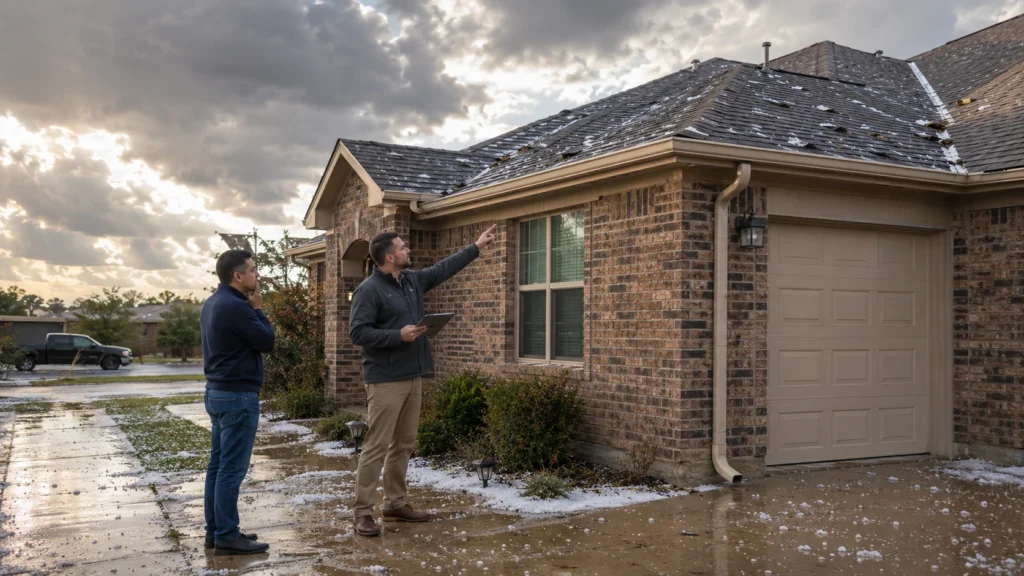
What to Do If Your Hail Claim Was Denied in Midland, TX is not a question anyone wants to search after a storm. But if you are here, there is a good chance your roof was inspected, your claim was reviewed, and then the insurance company said no. That can feel like a punch in the ribs. Especially when the damage looks obvious to you. You saw the hail. You heard it hitting the roof. Maybe you found dents in your gutters, torn window screens, bruised shingles, water spots on the ceiling, or debris scattered across the yard. Then the claim decision arrives, and suddenly the insurance company says the damage is not covered, not storm-related, too old, cosmetic, or below your deductible.
Frustrating? Absolutely. Final? Not always. A denied hail claim in Midland deserves a careful second look. West Texas storms can be aggressive, fast-moving, and messy. Hail rarely damages one item in a clean, simple way. It can affect roofing, vents, flashing, HVAC units, fences, windows, gutters, siding, and interior finishes. However, if the inspection is limited or the documentation is weak, legitimate damage may be missed. That is why this guide walks through what to do next. Not theory. Not vague advice. Real steps. If you are trying to figure out What to Do If Your Hail Claim Was Denied in Midland, TX, start here.
A Denied Hail Claim Does Not Always Mean No Damage Exists
Insurance companies deny claims for many reasons. Sometimes the denial is based on the policy. Sometimes it is based on the inspection. Sometimes it is based on timing, documentation, roof condition, exclusions, or disagreement over what caused the damage. That difference matters. A claim denial is not the same thing as proof that your property is fine. It simply means the carrier decided, based on the information it reviewed, that it does not owe payment under the policy.
That decision can sometimes be challenged. Before you panic, slow down. Read the denial. Review the estimate. Gather your evidence. Get another set of eyes on the property. Then decide your next move. The worst thing you can do is toss the letter into a drawer and assume the issue is over. In Midland, where hail damage can be mixed with heat damage, aging shingles, high winds, dust, and prior repairs, claim disputes are common. The key is knowing how to respond.
Why Hail Claims Get Denied in Midland, TX
The first step is understanding why the claim was denied. Most denial letters are not written in plain language. They may reference policy provisions, exclusions, inspection findings, or general statements about roof condition. You do not need to become an insurance expert overnight, but you do need to identify the reason the carrier gave. Here are the most common denial reasons.
The Insurance Company Says There Is No Hail Damage
This is one of the most frustrating claim outcomes. The adjuster inspects the roof and concludes there is no covered hail damage. Meanwhile, you may see dents, missing granules, bruising, cracked shingles, or damaged metal components.
So what happened? Sometimes the damage is subtle. Sometimes the inspection was too quick. Sometimes the adjuster focused only on shingles and ignored collateral damage. Sometimes the roof has mixed conditions, which makes the damage harder to separate. Hail damage does not always look dramatic from the ground. A roof may need close inspection, slope-by-slope documentation, test squares, soft metal review, attic evaluation, and interior leak checks. If that did not happen, the claim decision may be incomplete.
The Damage Is Blamed on Wear and Tear
This is another common reason for denial. The insurance company may say the roof damage is due to age, deterioration, poor maintenance, blistering, mechanical damage, foot traffic, installation defects, or ordinary granule loss.
Sometimes that is true. Roofs age. Shingles dry out. Heat matters. Midland sun is no joke. However, hail damage and wear can exist on the same roof. That is where disputes start. The carrier may focus on age. The policyholder may focus on storm impact. The real question becomes this: What caused the damage being claimed? That answer requires evidence.
The Damage Is Below the Deductible
Not every denied or unpaid claim is a full denial. Sometimes the insurance company acknowledges some damage but estimates the repair cost below the deductible. In practical terms, you receive no payment.
This can happen when the deductible is high, especially with wind and hail deductibles. However, it can also happen when the estimate is missing repair items. For example, the estimate may include a few roof repairs but omit gutters, vents, ridge cap, flashing, window screens, fence staining, HVAC damage, or interior water damage. One missed item may not change much. Several missed items can change everything.
The Carrier Says the Damage Happened Before the Policy Period
The insurance company may argue that the damage is old.
This can happen when:
- The roof has prior repairs
- There are older storm dates in the area
- The home was recently purchased
- The policy started after a major storm
- The carrier sees weathered impact marks
- The damage appears inconsistent across roof slopes
This is where storm history matters. Date-stamped photos, weather reports, contractor notes, maintenance records, real estate inspection reports, and prior claim documents can help establish when the damage likely occurred.
Cosmetic Damage Exclusions May Be Cited
Some policies limit or exclude cosmetic damage. That issue often comes up with metal roofs, gutters, vents, flashing, downspouts, garage doors, and other metal surfaces. The carrier may say the dents do not affect function.
But policy language matters. A dented gutter may be cosmetic in one situation and functional in another. A damaged vent may allow water intrusion. A metal roof dent may affect coating, drainage, or long-term performance. So, again, details matter. You need the policy. Not guesses.
Step 1: Read the Denial Letter Carefully
I know. The denial letter is probably the last thing you want to read. Read it anyway. That letter is your starting point. It should explain why the claim was denied or why payment was not issued. Look for specific phrases such as:
- No covered damage observed
- Wear and tear
- Deterioration
- Mechanical damage
- Cosmetic damage
- Below deductible
- Excluded damage
- Prior damage
- Late reporting
- Failure to mitigate
- Damage not caused by hail
- Policy limitation applies
Do not skim it once and move on. Read it slowly. Highlight anything that explains the carrier’s reasoning. Then separate emotion from information. You may disagree with the decision. That is fine. But to dispute it effectively, you need to respond to the specific reason given.
Here is a simple review table:
| Denial Language | What It May Mean | What to Gather |
| No hail damage found | Adjuster did not identify covered storm damage | Photos, second inspection, collateral damage evidence |
| Wear and tear | Carrier believes roof condition is age-related | Maintenance records, storm date proof, damage report |
| Below deductible | Damage estimate is lower than deductible | Contractor estimate, missing items list, full scope review |
| Cosmetic damage | Carrier says appearance changed but function did not | Policy language, functional damage documentation |
| Prior damage | Carrier believes damage happened before policy period | Date-stamped photos, inspection reports, storm history |
Save the denial letter. Save the envelope if it came by mail. Save every email. Keep every estimate. From this point forward, organization matters.
Step 2: Request the Full Claim File Documents
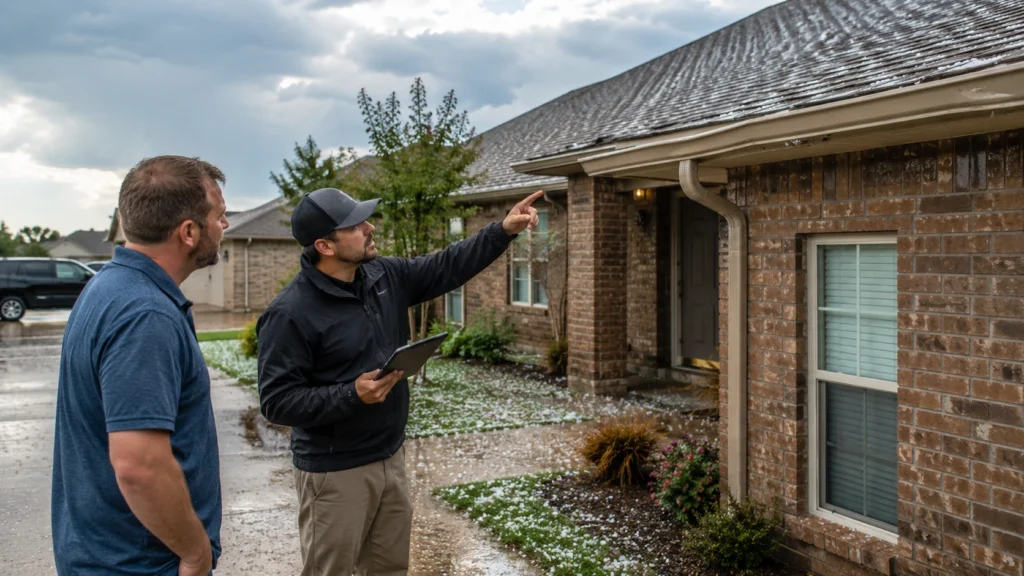
Do not rely only on the denial letter. Ask for the documents behind the decision. That may include the insurance estimate, adjuster report, photos, diagrams, roof measurements, coverage notes, and any engineering or consultant reports used to support the denial. Put the request in writing.
Keep it simple:
“I am requesting a complete copy of the estimate, inspection photos, adjuster report, diagrams, measurements, and any documentation used to evaluate my hail claim.”
Why does this matter? Because a denial letter may only give you the conclusion. The claim documents may show how the adjuster reached that conclusion. That is where problems can appear. Maybe only one roof slope was inspected closely. Maybe soft metals were not photographed. Maybe the estimate omitted interior damage. Maybe the roof measurements are wrong. Maybe the adjuster documented hail hits but did not include related repairs. You cannot know until you review the file.
Step 3: Review Your Policy, Not Just the Denial
This step is not exciting. It is important. Your policy controls the claim. Not a phone conversation. Not a contractor’s opinion. Not a short denial sentence. The policy determines what is covered, what is excluded, what duties you have after the loss, and what options may exist if there is a dispute. Insurance policies can also involve complex concepts such as indemnity, which generally refers to protection against financial loss. Pull your full policy, not just the declarations page.
Look for these sections:
- Wind and hail coverage
- Deductible amount
- Roof payment schedule
- Replacement cost terms
- Actual cash value terms
- Cosmetic damage exclusions
- Duties after loss
- Appraisal clause
- Ordinance or law coverage
- Matching limitations
- Suit limitation deadline
- Endorsements changing roof coverage
The declarations page gives you a snapshot. The policy gives you the rules. Also, do not assume every Texas policy is the same. It is not. Roof coverage can vary widely. Some policies pay replacement cost after repairs are completed. Others may include roof schedules based on age. Some include cosmetic limitations. Some have specific claim reporting rules. If you are unsure what a section means, get help before you make a major decision.
Step 4: Document the Damage Again
After a denial, documentation becomes your best friend. Take more photos. Take better photos. Take organized photos. Many homeowners make the same mistake. They take five random pictures of the roof from the yard and assume that is enough. It usually is not.
You need a clear visual record of the property condition. This is also where homeowners often search for How to Document Hail Damage for an Insurance Claim, because the strength of the dispute usually depends on the quality of the evidence. That means wide shots, mid-range shots, and close-ups. It also means photographing more than shingles.
Hail damage can affect:
- Roof shingles or panels
- Ridge caps
- Gutters
- Downspouts
- Window screens
- Garage doors
- Fences
- Exterior trim
- Siding
- Skylights
- Roof vents
- Pipe boots
- Flashing
- HVAC fins
- Patio covers
- Interior ceilings
- Attic areas
- Personal property damaged by leaks
Use a simple system. Start at the front of the property and move clockwise. Photograph each elevation. Then document each damaged component. If there is interior damage, photograph the room, the ceiling area, the stain, and any active leak path. Do not edit the photos heavily. Do not crop out context. You want the damage to be easy to verify. If emergency repairs are needed, document the damage before and after the repair. Keep receipts.
Step 5: Look for Collateral Damage
Collateral damage is often the key to hail claim disputes. Why? Because roof damage can be debated. Shingle bruising can be subtle. Granule loss may be blamed on age. But dents in soft metals can help show hail impact at the property. Look at metal surfaces around the home or building.
Check:
- Gutters
- Downspouts
- Roof vents
- Turbine vents
- Furnace caps
- Valley metal
- Flashing
- Window wraps
- AC condenser fins
- Metal fencing
- Garage doors
- Patio covers
- Mailboxes
- Outdoor light fixtures
If the insurance company says there was no hail damage, but the property has fresh dents on multiple exposed surfaces, that deserves attention. Also, note direction.
Hail often hits certain elevations harder depending on wind direction. Damage may be heavier on one side of the property. That does not mean the damage is fake. It may mean the storm had a directional impact. Good documentation should show this pattern.
Step 6: Get an Independent Inspection
If you are serious about disputing the denial, get another inspection. Not a casual glance. A real inspection. A qualified contractor, roofing professional, public adjuster, or other property damage professional may identify issues that were missed during the original inspection. The goal is not to “find damage no matter what.” The goal is to create a detailed, accurate record of the actual condition of the property.
An independent inspection should include:
- Roof condition findings
- Photos of damage
- Slope-by-slope notes
- Soft metal documentation
- Interior damage review
- Storm date correlation
- Repair recommendations
- Estimate review
- Missing line items
- Code-related concerns when applicable
This is especially important for Midland properties because hail damage often overlaps with heat exposure, wind wear, and aging materials. A rushed inspection may not separate those conditions clearly. If you contact MidlandPublicAdjuster.com, the goal should be a practical claim review. What was denied? What was missed? What does the policy say? What evidence exists? What is the next best step?
That is how you move from frustration to strategy.
Step 7: Compare the Carrier Estimate to the Real Repair Scope
Sometimes the issue is not a full denial. Sometimes the issue is an incomplete estimate. This is where homeowners get stuck. The insurance company may say, “We covered the damage.” But the contractor may say, “This estimate does not include everything needed to complete the repair.” Both statements cannot be ignored. You need to compare the estimate line by line.
Common missing hail claim items include:
| Missing Item | Why It Matters |
| Ridge cap | Often damaged separately from field shingles |
| Starter shingles | Required for proper roof replacement |
| Drip edge | May be code-required or needed for proper installation |
| Flashing | Damaged or disturbed flashing may need replacement |
| Pipe boots | Rubber components can crack or require replacement |
| Roof vents | Hail can dent or crack vent covers |
| Valley metal | May be damaged or required during roof work |
| Decking repairs | Hidden damage may appear after tear-off |
| Debris removal | Tear-off and disposal costs must be addressed |
| Permit fees | Some jurisdictions require permits |
| Interior repairs | Leaks may damage drywall, paint, insulation, or flooring |
| HVAC damage | Hail can damage condenser fins and equipment covers |
Do not assume a low estimate is accurate. Also, do not assume a contractor estimate is automatically correct. Compare. Verify. Document. Then submit the differences clearly.
Step 8: Request a Reinspection in Writing
Phone calls are fine for basic communication. Written requests are better for disputes. If your hail claim was denied, request a reinspection in writing. Email is often useful because it creates a timestamped record. Keep the message factual and professional. Do not rant. Do not accuse. Do not exaggerate. Be clear.
A good reinspection request should include:
- Claim number
- Property address
- Date of loss
- Reason you disagree with the denial
- Summary of damage found
- Supporting documents
- Request for a second inspection
- Request for a written response
Here is a simple structure:
“After reviewing the denial letter and inspecting the property further, I disagree with the claim decision. Additional storm-related damage has been documented to the roof, gutters, vents, and interior ceiling areas. I am attaching photos and an independent inspection summary. Please reopen the claim and schedule a reinspection.”
That is enough. The goal is not to win an argument in one email. The goal is to reopen the conversation with evidence.
Step 9: Understand the Difference Between Denial, Underpayment, and Dispute
These words are often used together, but they are not the same. Understanding the difference helps you choose the right next step.
Full Denial
A full denial means the insurance company is not paying for the claim. It may say there is no covered damage, the damage is excluded, or the loss is not related to hail. This type of claim may require strong evidence of covered damage and careful review of policy language.
Partial Denial
A partial denial means the carrier accepts some damage but denies other parts. For example, it may pay for gutters but deny the roof. Or it may pay for roof repairs but deny full replacement. Or it may accept exterior damage but deny interior water damage. Partial denials often require detailed documentation by item.
Underpayment
An underpayment happens when the carrier accepts coverage but pays less than what is needed to complete proper repairs. This may involve missing line items, low pricing, wrong measurements, incomplete labor, or overlooked damage.
Scope Dispute
A scope dispute means the parties disagree about what work is necessary. For example, the insurance estimate may include shingle repair while the contractor recommends full slope replacement.
Price Dispute
A price dispute means the parties may agree on the repair but disagree on cost. This can happen when labor, material pricing, access, steep roof charges, debris removal, or overhead costs are disputed. Why does this matter? Because each situation may require a different response. What to Do If Your Hail Claim Was Denied in Midland, TX depends heavily on the type of denial or dispute you are facing.
Step 10: Consider Whether Appraisal Applies
Many property insurance policies include an appraisal clause. Appraisal is commonly used when the policyholder and insurer disagree about the amount of loss. It is not always the right tool for every claim. However, it can be useful in certain disputes.
For example, appraisal may help when:
- The carrier accepts hail damage but pays too little
- The dispute is mainly about repair cost
- The estimate is missing necessary line items
- Both sides disagree about the amount of covered damage
- The scope is disputed after coverage has been accepted
However, appraisal may not solve every problem.
It may not be enough when:
- The claim is fully denied
- The carrier says there is no covered damage
- The insurer relies on an exclusion
- The dispute is about policy interpretation
- Legal questions are involved
That is why you should review the policy carefully before demanding appraisal. Appraisal has costs. Each side may hire its own appraiser, and there may be an umpire if the appraisers disagree. So, it should be used strategically. Not blindly.
Step 11: File a Complaint If the Claim Was Handled Unfairly
Sometimes the issue is not only the damage. Sometimes the issue is how the claim was handled. If the insurance company delayed communication, failed to explain the denial, ignored documentation, refused to provide claim documents, or handled the matter unfairly, you may consider filing a complaint with the Texas Department of Insurance. A complaint is not the same as winning the claim. It does not automatically force the insurer to pay everything requested. However, it can create regulatory review of claim-handling concerns.
Before filing, gather:
- Policy documents
- Denial letter
- Claim number
- Photos and videos
- Estimates
- Inspection reports
- Emails and letters
- Notes from phone calls
- Timeline of events
- Proof of submitted documents
Keep the complaint factual. Explain what happened, what you requested, how the insurer responded, and why you believe the handling was unfair.
Step 12: Watch the Deadlines
Deadlines matter. This is where many property owners get hurt. Your policy may include deadlines for reporting damage, submitting documents, completing repairs, requesting replacement cost benefits, demanding appraisal, or filing legal action. Some deadlines are short. Others depend on the type of policy or claim. Do not assume you have unlimited time because the storm happened months ago. Also, do not wait just because the insurance company has not responded quickly. Keep following up. Keep records. Keep copies of every document you send.
Create a simple claim timeline:
| Date | Event |
| Storm date | Hail or wind event occurred |
| Claim filed | Claim reported to insurer |
| Inspection date | Adjuster inspected property |
| Denial date | Denial or no-payment letter received |
| Reinspection requested | Written request sent |
| Documents submitted | Photos, estimates, reports sent |
| Follow-up date | Call or email made |
| Next deadline | Policy or claim deadline to watch |
This may feel tedious. Do it anyway. A clean timeline makes your claim easier to understand and harder to dismiss.
What Not to Do After a Denied Hail Claim
After a denial, people often react quickly. That is understandable. But fast decisions can create problems.
Avoid these mistakes:
- Do not throw away damaged materials without photos.
- Do not make permanent repairs before documenting the damage.
- Do not rely only on verbal conversations.
- Do not assume the first inspection was complete.
- Do not accept vague explanations without written clarification.
- Do not exaggerate or guess.
- Do not ignore interior leaks.
- Do not miss policy deadlines.
- Do not let another storm erase evidence.
- Do not assume a below-deductible estimate is accurate.
One more thing. Do not argue without evidence. Anger may be justified. Evidence is more useful. Photos, estimates, inspection reports, policy language, storm data, and written communication carry more weight than frustration.
Midland-Specific Hail Claim Issues
Midland properties face a tough combination of weather conditions. Hail is only one part of the picture. Heat, wind, dust, UV exposure, and sudden temperature changes can all affect roofing materials over time. That makes hail claim disputes more complicated. An insurance company may look at an older roof and say the damage is age-related. A contractor may say hail accelerated the damage. A public adjuster may look for evidence that separates old wear from recent storm impact. That investigation matters.
Midland also has a wide range of property types, including:
- Single-family homes
- Rental houses
- Apartment buildings
- Churches
- Office buildings
- Warehouses
- Retail centers
- Metal buildings
- Industrial properties
- Flat-roof commercial structures
Each property type brings different claim issues. A residential shingle roof may involve bruising, granule loss, ridge cap damage, and interior leaks. A commercial flat roof may involve membrane punctures, damaged coatings, ponding water issues, rooftop equipment damage, and flashing failures. A metal building may involve panel dents, fastener issues, coating damage, and water intrusion points. That is why What to Do If Your Hail Claim Was Denied in Midland, TX should not be answered with generic advice. The property matters. The policy matters. The damage pattern matters.
Questions to Ask Before Accepting the Denial
Before you accept the insurance company’s decision, ask yourself these questions:
- Did the adjuster inspect every roof slope?
- Were gutters, vents, downspouts, and soft metals checked?
- Did the denial letter cite specific policy language?
- Was the damage blamed on wear and tear?
- Did the insurer explain how it separated old damage from new damage?
- Was the estimate below deductible because items were missing?
- Did a contractor find additional damage?
- Was interior water damage inspected?
- Were photos included with the carrier’s findings?
- Was the storm date confirmed?
- Did the adjuster inspect attic or ceiling damage?
- Did you receive a full estimate or just a denial letter?
- Are there policy deadlines approaching?
- Has another qualified professional reviewed the decision?
If you cannot answer these questions clearly, the denial may need more review.
A Simple Action Plan After a Midland Hail Claim Denial
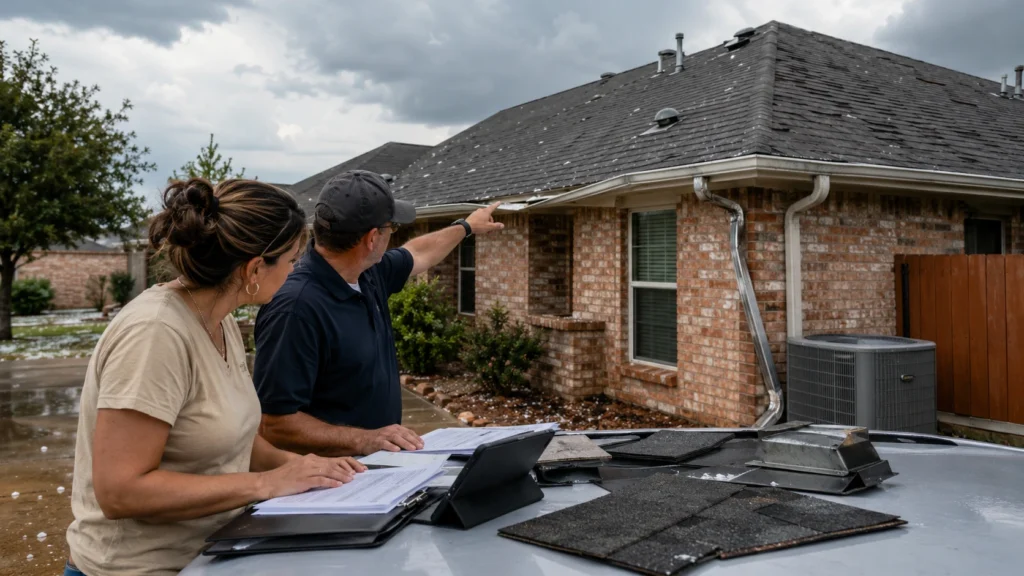
When people ask What to Do If Your Hail Claim Was Denied in Midland, TX, they usually want a clear order of steps. Here it is.
| Step | Action |
| 1 | Read the denial letter carefully |
| 2 | Request the full estimate and claim documents |
| 3 | Review your policy and deductible |
| 4 | Photograph all damage again |
| 5 | Look for collateral hail damage |
| 6 | Get an independent inspection |
| 7 | Compare estimates line by line |
| 8 | Submit additional evidence |
| 9 | Request reinspection in writing |
| 10 | Consider appraisal, complaint, or professional claim help |
Simple does not mean easy. But it gives you direction.
When to Contact a Public Adjuster
A public adjuster represents the policyholder, not the insurance company. That distinction matters. After a denied hail claim, a public adjuster may help review the denial, inspect the property, document damages, prepare an estimate, identify missing items, organize evidence, and communicate with the insurance carrier.
This can be especially helpful when:
- Your claim was denied
- Your roof damage was blamed on wear and tear
- Your estimate came in below deductible
- Your contractor found more damage
- Your insurer denied full roof replacement
- You received a confusing denial letter
- Your commercial property claim is complicated
- The claim has stalled
- You are unsure what the policy actually covers
The best time to ask for help is before the dispute becomes chaotic. Once repairs begin, materials disappear. Once more storms hit, damage patterns get harder to separate. Once deadlines pass, options may narrow.
So, if you are searching What to Do If Your Hail Claim Was Denied in Midland, TX, the answer may be: get the claim reviewed before accepting the denial as final. MidlandPublicAdjuster.com can serve as a local resource for property owners who need help understanding denied, delayed, underpaid, or disputed hail claims.
What a Strong Dispute Package Should Include
If you are going to challenge a denial, do it properly. Do not send one blurry photo and a one-line email. Build a dispute package.
A strong package may include:
- A copy of the denial letter
- A written explanation of disagreement
- Photos of all damaged areas
- Videos when helpful
- Independent inspection report
- Contractor estimate
- Public adjuster estimate, if applicable
- Storm date information
- Weather data or hail reports
- Interior damage photos
- Receipts for temporary repairs
- Prior maintenance records
- Roof age information
- Communication timeline
- Policy sections supporting your position
Organize everything. Label photos by area. Separate roof photos from interior photos. Keep estimates in PDF format. Use dates. Make the carrier’s review easier. That may sound counterintuitive. Why make it easy for the insurance company? Because clear documentation is harder to ignore.
What If the Insurance Company Still Says No?
Sometimes you do everything right, and the carrier still disagrees. That does not mean you have no options.
Depending on the facts, your next steps may include:
- Submitting additional documentation
- Requesting another reinspection
- Asking for supervisor review
- Invoking appraisal if the dispute qualifies
- Filing a complaint with TDI
- Consulting a public adjuster
- Speaking with an attorney if legal issues exist
The right option depends on the reason for denial. For example, if the insurer agrees there is hail damage but underestimates the repair cost, appraisal may be worth discussing. If the insurer says there is no coverage at all, the issue may require a different strategy. If the claim was mishandled, a complaint may be appropriate. Do not choose a tool before understanding the problem. That is the heart of effective claim recovery.
Final Thoughts: Do Not Let a Denial Be the Last Word
A denied hail claim can feel personal. It is your home. Your business. Your roof. Your money. Your policy. So when the insurance company says no, it is natural to feel angry, confused, or worn out. But take a breath. A denial is a decision. It is not always the final answer.
If you are trying to understand What to Do If Your Hail Claim Was Denied in Midland, TX, start with the basics. Read the denial letter. Review the policy. Document the damage. Get an independent inspection. Compare the estimate. Request reinspection in writing. Watch deadlines. Then decide whether professional help makes sense. Midland hail claims can be complicated, especially when roof age, storm history, cosmetic damage, deductibles, and missing scope items all collide.
However, complicated does not mean hopeless. The key is evidence. The key is timing. The key is not accepting a denied claim without understanding exactly why it was denied and whether that decision is supported by the facts. If your hail claim was denied in Midland, TX, do not assume the insurance company’s first decision is the end of the road. Contact MidlandPublicAdjuster.com for help reviewing the denial, documenting the damage, and identifying the next practical step. Because when hail hits hard, your claim deserves more than a quick no.
FAQs
Yes, you can usually dispute a denied hail claim by submitting additional documentation, requesting a reinspection, or getting an independent claim review.
A hail claim may be denied because the insurer believes there is no covered damage, the damage is wear and tear, the cost is below the deductible, or an exclusion applies.
Start by reading the denial letter carefully, saving all claim documents, and identifying the exact reason the insurance company gave for the denial.
Yes, a second inspection can help identify overlooked roof damage, collateral damage, interior leaks, or missing repair items.
That often means the insurance company estimated the damage below your deductible, but the estimate should still be reviewed for missing or undervalued items.
Yes, a public adjuster can inspect the damage, review the denial, document missing items, prepare an estimate, and communicate with the insurer.
Helpful documents include the denial letter, policy, photos, videos, contractor estimates, inspection reports, storm date information, and all claim communications.
Appraisal may help if the dispute is about the amount of loss, but it may not resolve disputes about coverage, exclusions, or policy interpretation.
Document the damage first whenever possible, and keep photos, receipts, invoices, and repair records if emergency repairs are needed.
Deadlines can vary by policy, so review your policy quickly and act as soon as possible after receiving the denial.