
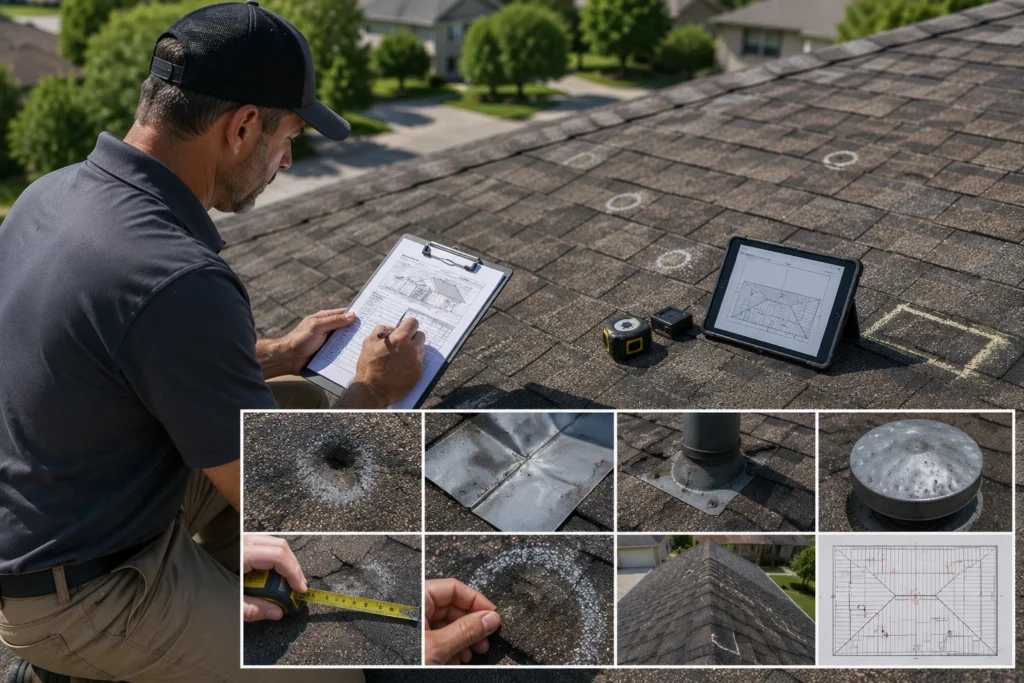
Hailstorms can leave behind more than dents and broken shingles. They can also create a paperwork problem. If you’re researching how to document hail damage for an insurance claim, you’re already taking one of the smartest steps a property owner can take. Good documentation often becomes the foundation of a successful claim, while poor documentation can create delays, disputes, and frustration.
The reality is simple. Insurance companies rely heavily on evidence. The more organized and thorough your documentation is, the easier it becomes to demonstrate what happened, when it happened, and what it will cost to repair. For homeowners and business owners in Midland, hail damage is not a rare event. Severe storms regularly move through West Texas, bringing hailstones capable of damaging roofs, siding, gutters, windows, HVAC systems, and more. As a result, knowing how to properly document storm damage before filing a claim can make a significant difference. This guide walks through every step of the process.
Understanding Hail Damage and Insurance Claims
Before grabbing a camera and heading outside, it helps to understand why documentation matters so much. Insurance claims are evidence-based processes. Adjusters don’t simply rely on a homeowner’s description of damage. They evaluate photographs, inspection findings, measurements, weather reports, and repair estimates to determine what happened and how much should be covered.
That means your documentation serves two important purposes:
- It proves damage exists.
- It helps establish the scope of repairs.
Without sufficient documentation, legitimate damage can be overlooked.
What Qualifies as Hail Damage?
Many people immediately think about roof damage. That’s certainly common, but hail can affect much more. Potential hail damage may include:
| Area | Possible Damage |
| Roof | Bruised shingles, granule loss, fractures |
| Gutters | Dents and deformation |
| Siding | Cracks, chips, impact marks |
| Windows | Broken glass, damaged screens |
| HVAC Equipment | Bent fins, impact damage |
| Fences | Splitting, cracking, dents |
| Outdoor Structures | Damage to sheds, pergolas, and patios |
Sometimes damage is obvious. Other times it’s surprisingly subtle. A roof can appear normal from the ground while significant functional damage exists beneath the surface. That’s why documentation should be comprehensive.
Step 1: Prioritize Safety Before Inspecting Damage
The first rule of documenting hail damage is protecting yourself. No insurance claim is worth risking injury. After a severe storm, properties may contain hazards that aren’t immediately visible.
These can include:
- Downed electrical lines
- Wet surfaces
- Broken glass
- Unstable roofing materials
- Structural damage
Before beginning any inspection, walk around the property carefully. Observe conditions from the ground. Take notes. Look for obvious signs of damage without putting yourself in danger.
Avoid Climbing Onto the Roof
This is one of the biggest mistakes homeowners make. They want answers quickly. Understandable. However, storm-damaged roofs can become slippery and unstable. Loose shingles, hidden fractures, and wet surfaces create dangerous conditions.
Instead:
- Use binoculars
- Use a camera with zoom capability
- Photograph visible damage from safe locations
- Leave roof walking to trained professionals
A good photograph isn’t worth a broken leg.
Step 2: Record Basic Storm Information
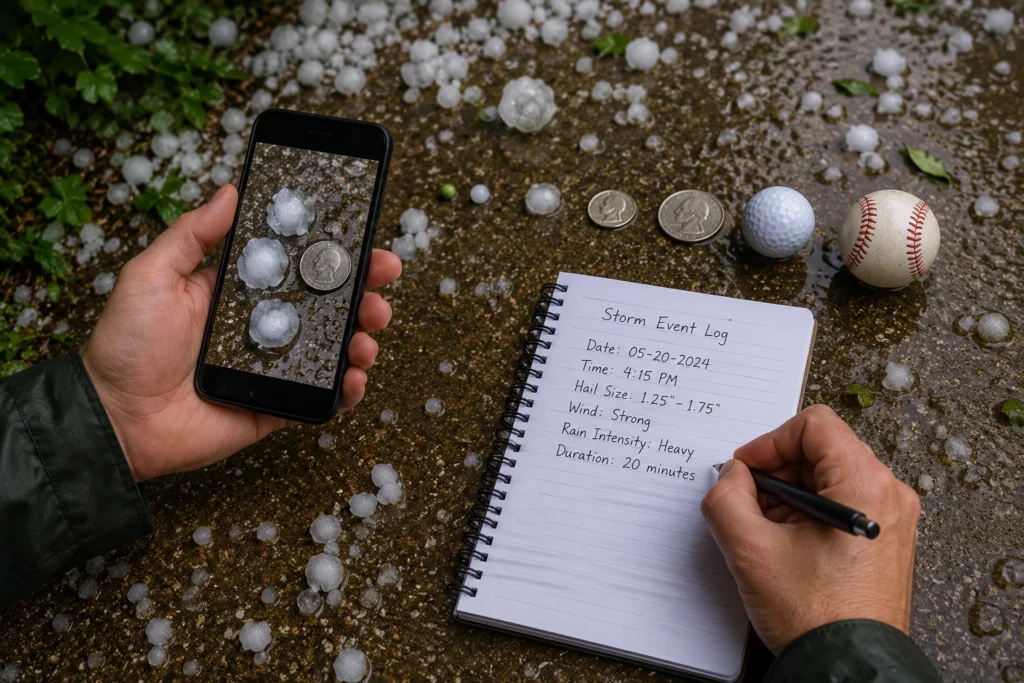
Many claim files begin with photographs. The strongest claim files begin with context. Start creating a storm event log immediately.
Document:
- Date of storm
- Approximate time
- Hail size
- Wind conditions
- Rain intensity
- Duration of storm
The sooner you write these details down, the more accurate they’ll be.
Photograph the Hailstones
If hailstones remain on the ground after the storm, photograph them. Use an object for size comparison.
Examples include:
- Coins
- Golf balls
- Measuring tape
- Ruler
The comparison provides useful visual evidence later.
For example:
| Object Comparison | Approximate Hail Size |
| Pea | 1/4 inch |
| Dime | 3/4 inch |
| Quarter | 1 inch |
| Golf Ball | 1.75 inches |
| Baseball | 2.75 inches |
Larger hail generally increases the likelihood of significant property damage.
Obtain Weather Verification
Weather data often becomes valuable supporting evidence.
Sources may include:
- National Weather Service reports
- Local storm reports
- Radar imagery
- Weather tracking services
Weather verification helps establish that a hail-producing storm occurred in your area during the claimed timeframe. When documenting a hail event, accuracy matters. The process of collecting and preserving evidence resembles the concept of forensic science, where observations, photographs, and physical evidence are gathered to help establish what occurred. The more methodical your documentation process, the easier it becomes to support the facts surrounding your insurance claim.
Step 3: Photograph All Exterior Damage
Now it’s time to start building visual evidence. Photos become one of the most important components of documenting hail damage. Take more than you think you’ll need. Then take more. Digital storage is inexpensive. Missing evidence is not.
Begin With Wide-Angle Photos
Start broad.
Capture:
- Entire home
- Front elevation
- Rear elevation
- Side elevations
- Detached structures
These images create context. They help establish the property’s condition and show where damage exists.
Move to Detailed Photos
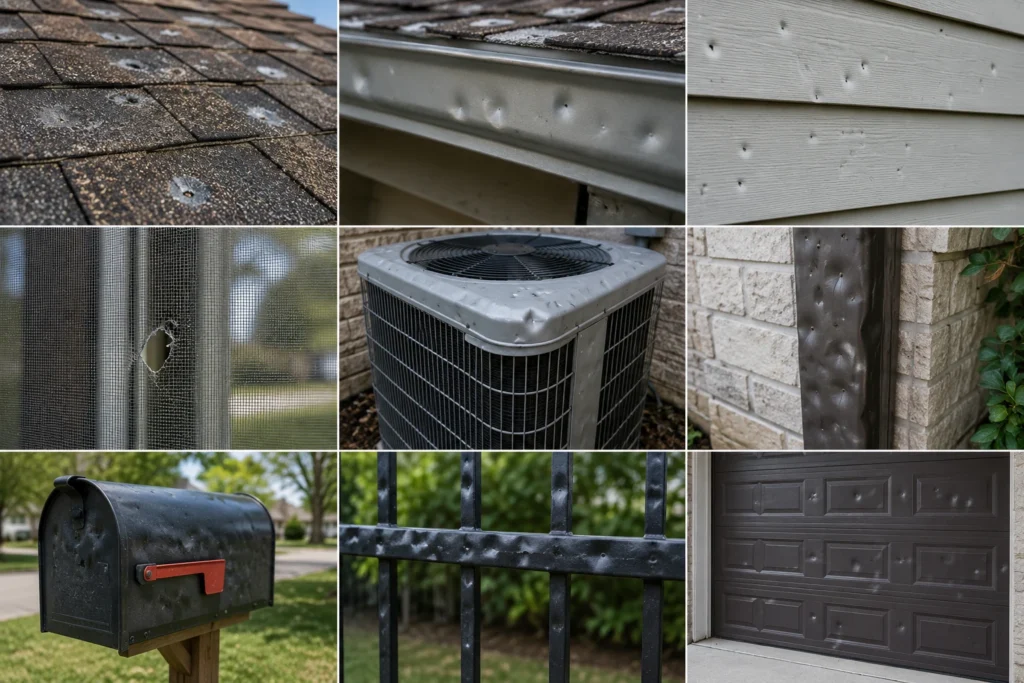
Once wide shots are complete, begin capturing close-up damage images.
Focus on:
- Roof impacts
- Dented gutters
- Damaged siding
- Window screens
- Outdoor equipment
- Garage doors
Take photographs from multiple angles. Different lighting conditions can reveal damage that may otherwise remain hidden.
Photograph Collateral Damage
Many experienced inspectors pay close attention to collateral indicators. Why? Because collateral damage often confirms hail activity.
Examples include:
- Dented downspouts
- Metal roof accessories
- Window screen damage
- Air conditioning units
- Mailboxes
- Metal fencing
These items frequently show impact marks more clearly than roofing materials. As a result, they become important supporting evidence.
Step 4: Document Roof Damage Thoroughly
Roof damage often represents the largest portion of a hail claim. Unfortunately, it’s also one of the most misunderstood areas. Not every mark is hail damage. Likewise, not every hail impact is obvious.
Common Signs of Roof Hail Damage
Potential indicators include:
- Circular impact marks
- Bruised shingles
- Cracked shingles
- Granule displacement
- Exposed asphalt mat
- Fractured fiberglass reinforcement
Document every suspected impact area. Do not attempt to diagnose damage yourself. Simply record what you observe. For many homeowners, the roof represents the most expensive portion of a property damage claim. That’s why a Hail Damage Roof Insurance Claim often receives significant scrutiny from insurance adjusters. Thorough photographs, detailed notes, and professional inspection reports can help demonstrate the full extent of roof damage and support a more accurate evaluation of necessary repairs.
Areas Commonly Missed
Many homeowners focus only on the main roof field. Damage frequently occurs elsewhere.
Pay attention to:
- Ridge caps
- Hip caps
- Flashing
- Pipe boots
- Roof vents
- Skylights
These components often sustain damage during hail events and may require replacement.
Create a Roof Documentation Checklist
A checklist helps prevent missed areas.
| Roof Component | Documented |
| Front slope | □ |
| Rear slope | □ |
| Left slope | □ |
| Right slope | □ |
| Ridge caps | □ |
| Flashing | □ |
| Roof vents | □ |
| Skylights | □ |
Simple systems often produce the best results.
Step 5: Record Interior Damage
Not all hail damage remains outside. In many cases, roof damage eventually allows moisture intrusion. That’s when interior damage begins.
Signs of Interior Damage
Watch for:
- Ceiling stains
- Water spots
- Bubbling paint
- Peeling drywall
- Wet insulation
- Mold growth
Photograph everything. Even minor staining can become important evidence later.
Document Every Room
Move methodically through the structure.
Photograph:
- Living rooms
- Bedrooms
- Hallways
- Bathrooms
- Closets
- Attics
Take wide shots first. Then close-ups. This combination provides both context and detail.
Why Interior Documentation Matters
Insurance companies typically evaluate both direct and resulting damage.
Roof damage may trigger:
- Ceiling repairs
- Drywall replacement
- Insulation replacement
- Painting
- Flooring repairs
Interior documentation helps connect those repairs back to the storm event. Without it, portions of the claim may be overlooked.
Step 6: Take Video Documentation
Photos freeze moments. Videos provide context. That’s why video evidence has become increasingly valuable. A short walkthrough video can capture conditions that still photos sometimes miss.
Effective Video Techniques
When recording:
- Walk slowly
- Keep the camera steady
- Narrate observations
- Record damaged areas clearly
- Include exterior and interior conditions
Speak naturally.
State:
- Date
- Property address
- Storm date
- Areas being documented
This creates a clear visual timeline.
Benefits of Video Evidence
Videos often show:
- Overall property condition
- Extent of damage
- Multiple damaged areas in one recording
- Relationships between damaged components
They add another layer of credibility to the claim file.
Step 7: Create a Detailed Written Damage Report
Great claim documentation combines visuals with written observations. Think of yourself as building a case file. Every observation matters.
What to Include
Your report should contain:
- Date damage discovered
- Storm date
- Areas affected
- Damage description
- Temporary repairs completed
For example:
Roof:
Observed multiple impact marks on rear roof slope. Granule loss visible. Several damaged ridge caps noted.
Gutters:
Visible dents along north elevation.
Interior:
Water staining observed in upstairs bedroom ceiling.
Simple. Clear. Effective.
Organize Damage by Area
Structure helps.
Divide findings into categories:
- Roof
- Gutters
- Siding
- Windows
- HVAC
- Interior damage
- Personal property
Organization makes later claim discussions much easier.
Step 8: Save Every Receipt and Expense
Many property owners forget this step. That can become costly. Storm-related expenses may be recoverable depending on policy terms.
Examples include:
- Emergency tarping
- Water mitigation
- Temporary repairs
- Debris removal
- Hotel accommodations
- Additional living expenses
Keep receipts. Every single one. Create both digital and physical copies. If reimbursement becomes available later, you’ll already have supporting documentation. For property owners in Midland, where severe hail events can cause widespread damage, expense tracking often becomes an important part of the recovery process.
Step 9: Obtain a Professional Inspection Report
At this point, you’ve built a strong foundation. You’ve gathered photographs. Recorded videos. Logged storm details. Documented interior and exterior conditions. Now it’s time to add professional insight. A professional inspection can uncover damage that homeowners simply cannot see from the ground. That’s not a criticism. It’s reality. Many forms of hail damage require close inspection and experience to identify correctly.
Why Professional Inspections Matter
A thorough inspection may reveal:
- Hidden roof damage
- Functional shingle damage
- Flashing damage
- Vent damage
- Soft metal impacts
- Code-related repair requirements
Professional reports often include detailed photographs, measurements, diagrams, and repair recommendations. These reports can strengthen claim documentation considerably.
What a Quality Inspection Report Should Include
Look for reports that contain:
| Documentation Element | Purpose |
| Photographs | Visual proof of damage |
| Measurements | Scope verification |
| Damage descriptions | Detailed findings |
| Roof diagrams | Location identification |
| Repair recommendations | Restoration guidance |
The goal is simple. Create a complete picture of the loss. The more complete the picture, the easier it becomes to support necessary repairs.
Step 10: Organize Your Insurance Claim File
Many claims become difficult because documentation exists but isn’t organized. That’s a preventable problem. A well-organized claim file saves time and reduces confusion.
Create a Digital Claim Folder
Consider creating separate folders for:
- Storm information
- Photographs
- Videos
- Inspection reports
- Insurance correspondence
- Repair estimates
- Receipts
Clear organization makes it easier to locate information when needed.
Recommended Claim File Structure
Hail Claim Folder
Storm Information
Exterior Photos
Interior Photos
Videos
Inspection Reports
Insurance Documents
Estimates
Receipts
Correspondence
Simple systems work best.
Complicated systems often get abandoned.
Back Everything Up
Technology fails. Waiting Too Long
Phones get lost.
Computers crash.
Back up documentation to:
- Cloud storage
- External hard drives
- Secondary devices
Multiple backups provide peace of mind.
Common Documentation Mistakes That Hurt Hail Claims
Let’s talk about mistakes. Not because homeowners are careless. Because claim documentation often happens during stressful situations. People are dealing with property damage, family concerns, work obligations, and unexpected expenses. Mistakes happen. The key is avoiding the most common ones.
Waiting Too Long
Time matters.
The longer you wait:
- Evidence deteriorates
- Water damage spreads
- Conditions change
- Memories fade
Document damage as soon as it is safe to do so.
Taking Too Few Photos
This mistake happens constantly. A homeowner takes ten photographs and assumes it’s enough. Then questions arise later. The solution? Take dozens. Take hundreds if necessary. You can always delete unnecessary images later.
Failing to Photograph Undamaged Areas
This may sound strange. But undamaged areas provide context.
They help show:
- Property condition
- Extent of damage
- Damage patterns
Context strengthens documentation.
Throwing Away Damaged Materials
Damaged materials can become evidence.
Examples include:
- Broken shingles
- Damaged screens
- Impacted vents
- Dented accessories
Keep damaged items when practical until claim questions are resolved.
Not Tracking Communication
Every claim involves communication.
Track:
- Phone calls
- Emails
- Inspection dates
- Claim numbers
- Adjuster information
Create a simple communication log. Future you will be grateful.
How Documentation Helps During the Insurance Adjuster Inspection
The adjuster inspection is one of the most important moments in the claims process. Preparation matters. A lot.
Arrive Organized
Have documentation ready.
This may include:
- Photos
- Videos
- Weather reports
- Inspection reports
- Repair estimates
An organized presentation creates a smoother inspection experience.
Walk Through the Damage
Show the adjuster:
- Exterior damage
- Roof concerns
- Interior staining
- Damaged personal property
Point out areas you’ve documented. Do not assume every damaged area will automatically be noticed.
Ask Questions
Good questions include:
- Which areas are being inspected?
- What damage has been identified?
- Are additional inspections needed?
- Will interior damage be included?
The inspection should be a conversation. Not a one-sided event.
Special Considerations for Midland Homeowners
Hail is not unusual in West Texas. In fact, severe storms are part of life for many property owners in Midland. That reality creates unique challenges.
Why Midland Sees Significant Hail Activity
The region experiences powerful weather systems capable of producing:
- Large hail
- High winds
- Intense thunderstorms
- Rapid storm development
As a result, roofing systems can sustain substantial impacts in a very short period of time. Sometimes damage occurs in minutes.
Multiple Storm Events Create Challenges
Another issue is storm frequency. A property may experience multiple hailstorms over several years.
This can create questions about:
- Storm dates
- Damage timing
- Previous repairs
- Existing wear and tear
Detailed documentation helps separate recent damage from older conditions.
Early Documentation Matters in Midland
Property owners who document quickly often benefit from:
- Better evidence preservation
- Stronger claim support
- Faster claim preparation
- Reduced documentation gaps
In Midland, where hail events can affect entire neighborhoods simultaneously, early action can make a significant difference.
When Documentation May Not Be Enough
Strong documentation is important. Very important. But documentation alone does not automatically resolve every claim issue. Sometimes disagreements occur.
Coverage Questions
Insurance policies contain terms, conditions, and exclusions.
Disputes sometimes involve:
- Cosmetic damage
- Deductibles
- Exclusions
- Policy interpretation
Documentation supports the claim, but coverage decisions also depend on policy language.
Scope Disputes
A claim may acknowledge damage. Yet disagreement can still occur regarding the amount of repairs required.
Examples include:
- Missing roof components
- Flashing replacement
- Vent replacement
- Code-required work
These disagreements often center on scope rather than coverage.
Pricing Disputes
Even when everyone agrees damage exists, pricing can vary.
Differences may arise regarding:
- Labor rates
- Material pricing
- Quantity calculations
- Repair methods
Detailed documentation helps support discussions involving repair costs.
How a Public Adjuster Can Help Review Documentation
Many homeowners handle straightforward claims successfully on their own. Others encounter situations that become more complex. That’s where professional guidance may become valuable.
Reviewing Existing Documentation
A public adjuster can review:
- Photographs
- Videos
- Inspection reports
- Estimates
- Claim correspondence
Sometimes important details are identified during this review process.
Identifying Documentation Gaps
Even well-prepared homeowners occasionally miss things.
Common gaps may include:
- Missing photos
- Incomplete room documentation
- Limited roof evidence
- Missing expense records
Identifying those gaps early can strengthen the overall claim presentation.
Supporting Accurate Claim Evaluation
Comprehensive documentation helps ensure the claim reflects the actual damage present. The objective isn’t to inflate a claim. It’s to document the loss accurately. That’s an important distinction.
Building a Documentation Mindset
The strongest claims often share one characteristic. Preparation. Not perfection. Preparation. A homeowner who takes the time to photograph damage, save receipts, organize files, and document conditions creates a much stronger claim file than someone relying solely on memory weeks later. Think of documentation as insurance for your insurance claim. Every photograph matters. Every receipt matters. Every note matters. The small details often become the big details later.
Quick Hail Damage Documentation Checklist
Use this checklist immediately after a storm:
Storm Information
- Record date and time
- Photograph hailstones
- Save weather reports
Exterior Documentation
- Photograph all elevations
- Document roof damage
- Photograph gutters and siding
- Record collateral damage
Interior Documentation
- Photograph stains and leaks
- Document attic conditions
- Record damaged belongings
Supporting Documentation
- Obtain professional inspection
- Save receipts
- Keep communication records
- Organize digital files
Completing these steps creates a strong foundation for the claims process.
Conclusion
Knowing how to document hail damage for an insurance claim is one of the most valuable skills a property owner can develop after a severe storm. Good documentation creates clarity. It establishes timelines. It preserves evidence. Most importantly, it helps ensure the condition of the property is accurately represented throughout the claims process.
The process does not have to be complicated. Start with safety. Then document the storm, photograph every affected area, record videos, save receipts, organize your files, and obtain professional inspections when appropriate. Each step builds a stronger foundation.
For homeowners and business owners in Midland, where hailstorms can arrive suddenly and leave significant property damage behind, preparation can make all the difference. The sooner evidence is preserved and organized, the better positioned you’ll be when discussing the loss with your insurance company. A thorough claim file won’t guarantee a specific outcome, but it will ensure your claim starts with the strongest possible documentation.
FAQs
You should document damage as soon as it is safe to do so. Early documentation helps preserve evidence before conditions change.
Photograph the roof, gutters, siding, windows, HVAC equipment, interior water damage, and any visible hail impacts from multiple angles.
Yes. Modern smartphones typically provide sufficient photo and video quality for documenting storm damage.
If practical, keep damaged materials until the claim is resolved. They may serve as supporting evidence if questions arise later.
Yes. Weather reports can help verify that a hail-producing storm occurred in your area on the reported date.
Avoid climbing onto the roof. Use ground-level photos and consider scheduling a professional inspection.
Yes. Videos provide additional context and can show the overall condition of the property more effectively than photos alone.
Professional inspections often identify hidden damage and provide detailed reports that can strengthen claim documentation.
Yes. Missing photos, incomplete records, or insufficient evidence may make it harder to support the full scope of damage.
Save photos, videos, inspection reports, receipts, repair estimates, weather reports, and all claim-related correspondence.