
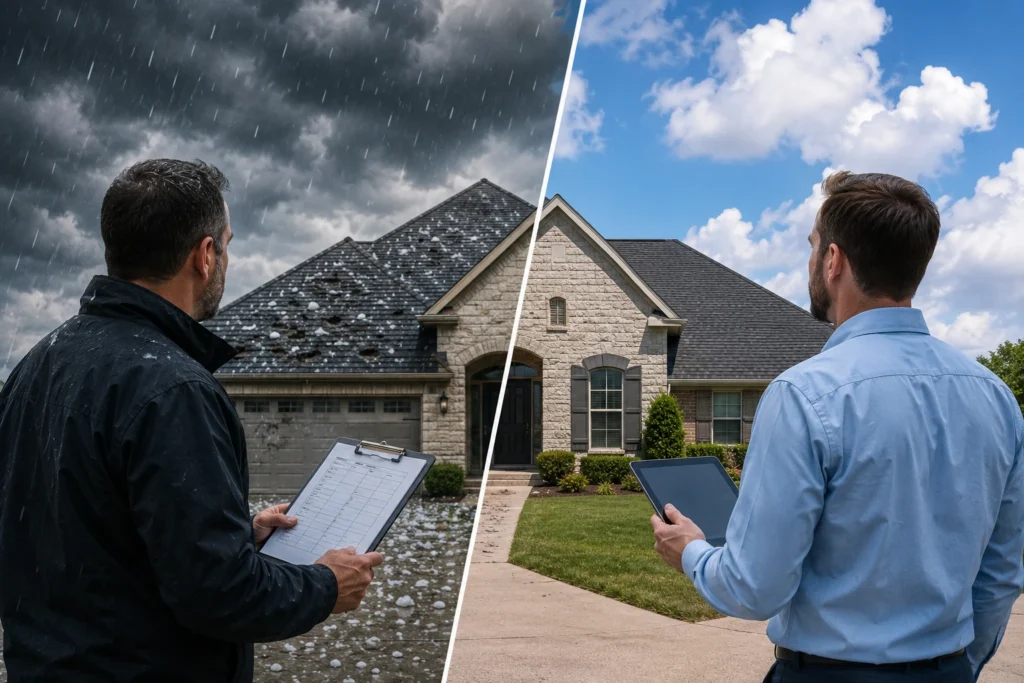
Midland property owners know that hailstorms are part of life in West Texas. One severe storm can damage roofing systems, dent HVAC equipment, crack siding, and create thousands or even hundreds of thousands of dollars in repair costs. Yet once the storm passes, another challenge begins: the insurance claim.
That is why understanding Public Adjuster vs. Insurance Adjuster for Hail Claims in Midland, TX is so important. Many homeowners and business owners assume everyone involved in the claim process is working toward the same goal. In reality, insurance adjusters and public adjusters serve different roles, represent different interests, and often approach claims from different perspectives. The difference can significantly affect how damage is documented, how repairs are estimated, and ultimately how a claim is resolved. Whether you own a home, office building, apartment complex, retail center, warehouse, or industrial property, understanding these roles can help you make informed decisions after a hailstorm.
Why Hail Damage Is a Major Issue in Midland, Texas
West Texas experiences some of the most volatile weather conditions in the state. Strong thunderstorms regularly produce hail capable of damaging residential and commercial properties. Some hail damage is obvious.
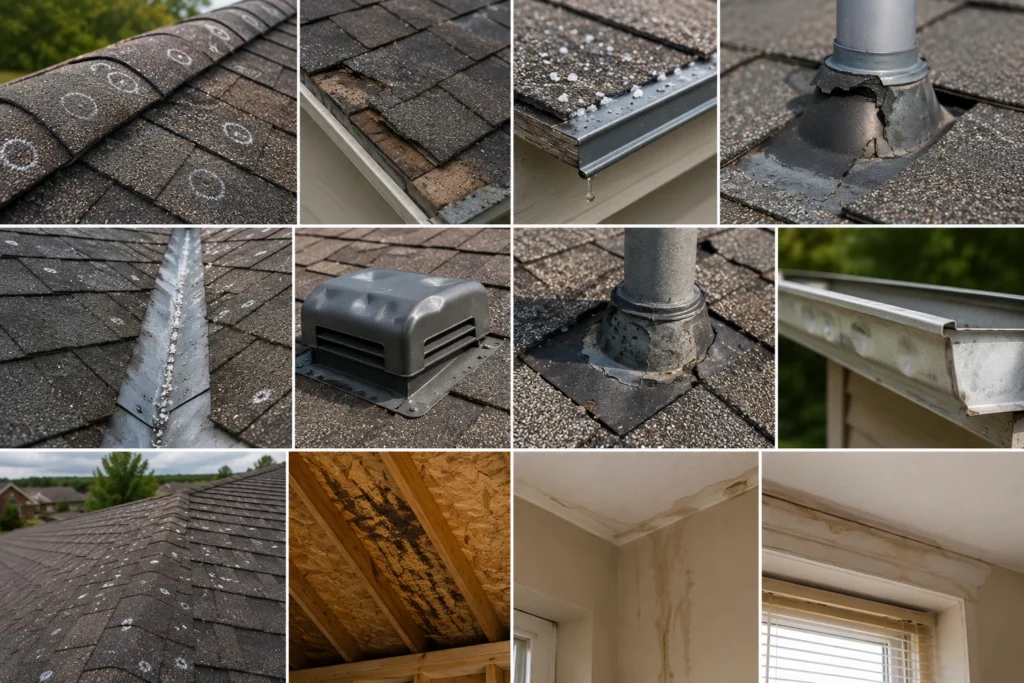
A shattered skylight or heavily dented metal roof leaves little room for debate. Other forms of damage are much harder to identify. Roofing materials may suffer bruising, granule loss, fractures, or hidden impacts that are not immediately visible from the ground. These issues may not create leaks for months, but they can shorten the life of a roofing system and lead to costly repairs later.
Common hail-related damage includes:
- Asphalt shingle damage
- Tile roof fractures
- Metal roofing dents
- Damaged flashing
- HVAC condenser damage
- Gutter and downspout dents
- Window impacts
- Siding damage
- Skylight damage
- Interior water intrusion
Because some damage remains hidden, claim evaluations often become more complicated than property owners initially expect. In many cases, adjusters must make decisions based on available evidence, contractor findings, policy language, and inspection results. Much like a heuristic helps simplify complex decision-making, adjusters often rely on professional judgment when determining whether hail damage requires repair or replacement. That judgment can lead to differing conclusions.
Understanding the Hail Claim Process
Most Midland hail claims follow a similar path. Understanding that process makes it easier to identify where disputes often occur.
Step 1: Reporting the Loss
The property owner contacts the insurance company and reports storm damage. The insurer opens a claim file and assigns an adjuster.
Step 2: Property Inspection
An inspection is scheduled. The adjuster evaluates visible storm damage and gathers information regarding the loss.
Step 3: Coverage Review
The insurance company reviews the policy to determine what damage may qualify for coverage.
Step 4: Estimate Preparation
The adjuster prepares an estimate outlining repair recommendations and projected costs.
Step 5: Settlement Offer
The insurer issues a settlement based on its findings and policy provisions.
Step 6: Repairs and Supplements
Contractors begin repairs and may identify additional damage requiring supplemental consideration. At first glance, the process appears straightforward. However, disputes commonly emerge during nearly every stage.
Where Hail Claim Disputes Commonly Occur
The most significant disagreements usually involve scope and pricing rather than whether a storm occurred. Property owners often discover that contractors and adjusters do not always reach the same conclusions.
Common dispute areas include:
| Dispute Area | Reason for Disagreement |
| Roof Repair vs. Replacement | Severity of damage interpretation |
| Missing Line Items | Components overlooked during inspection |
| Code Upgrades | Building requirements not included |
| Interior Damage | Moisture issues discovered later |
| HVAC Damage | Functional impacts disputed |
| Commercial Roofing | Specialized systems require detailed review |
| Material Pricing | Contractor pricing differs from estimate |
Even small differences can create substantial gaps between actual repair costs and insurance estimates.
What Is an Insurance Adjuster?
An insurance adjuster investigates property claims on behalf of the insurance company. Their role is essential to the claim process. Without adjusters, insurers would have no practical way to evaluate losses, determine coverage, and estimate repair costs. However, understanding who they represent is critical. Insurance adjusters work for insurance companies. Their responsibility is to evaluate claims according to policy language, company guidelines, and available evidence.
Types of Insurance Adjusters
There are generally two primary categories.
Staff Adjusters
Staff adjusters are direct employees of an insurance carrier. They handle claims exclusively for that company.
Independent Adjusters
Independent adjusters are contractors hired by insurance companies. Although they are not employees of the carrier, they still represent the insurer during the claim. After large Midland hailstorms, insurance companies frequently rely on independent adjusters to handle the increased volume of claims.
Responsibilities of Insurance Adjusters
Insurance adjusters typically:
- Inspect damaged property
- Review policy provisions
- Document visible damage
- Prepare repair estimates
- Recommend settlement amounts
- Communicate findings to the insurer
These responsibilities are important. But they are different from advocacy. Their role is claim evaluation, not policyholder representation.
Advantages of Insurance Adjusters
Insurance adjusters provide several benefits within the claims process.
No Direct Cost to Property Owners
Insurance companies pay for their adjusters. Property owners do not receive separate bills for inspection services.
Claims Experience
Many insurance adjusters handle hundreds of claims throughout their careers. This experience often helps them identify common damage patterns and repair requirements.
Access to Carrier Resources
Insurance adjusters frequently have access to engineering consultants, pricing databases, claim software, and company support resources. These tools assist with claim evaluations.
Necessary Part of Every Claim
Regardless of whether a public adjuster becomes involved, the insurance company will still assign an adjuster to evaluate the loss. Their participation is a required component of the claims process.
Limitations Property Owners Should Understand
While insurance adjusters serve an important role, property owners should understand practical limitations.
High Claim Volume
After major hailstorms, adjusters often face overwhelming workloads. One adjuster may inspect multiple properties every day for weeks. That volume can create challenges.
Limited Inspection Time
Time constraints may prevent exhaustive evaluations during initial inspections. Some damage may not be immediately apparent.
Focus on Visible Conditions
Many inspections prioritize observable damage. Hidden issues sometimes emerge later when repairs begin.
Company Procedures
Insurance adjusters operate within carrier guidelines and claim handling procedures. These frameworks help create consistency but may also influence how claims are evaluated. This does not mean adjusters are acting improperly. Rather, it reflects the realities of large-scale claim management.
What Is a Public Adjuster?
A public adjuster also evaluates property damage. The key difference is who they represent. A public adjuster works exclusively for the policyholder. That distinction changes the entire relationship. Instead of representing the insurance company, a public adjuster advocates for the interests of the property owner throughout the claim process.
Public Adjuster Responsibilities
Public adjusters often assist with:
- Policy analysis
- Property inspections
- Damage documentation
- Estimate preparation
- Claim presentation
- Negotiation with insurers
- Supplemental claim support
- Settlement discussions
In many ways, they serve as claim managers for the insured.
How Public Adjusters Get Paid
Unlike insurance adjusters, public adjusters generally work on a contingency fee basis. Their compensation is typically a percentage of the claim recovery. This means payment is often tied directly to the outcome of the claim.
Benefits of Hiring a Public Adjuster
Many Midland property owners choose public adjusters because they want independent representation. Common advantages include:
Independent Damage Assessment
Public adjusters perform their own inspections rather than relying solely on insurance company findings.
Detailed Documentation
Strong documentation can play a significant role in claim outcomes. Photographs, measurements, repair scopes, contractor findings, and policy analysis all contribute to claim presentation.
Claim Management Support
Large losses can quickly become overwhelming. Public adjusters help organize information, coordinate documentation, and manage communications.
Negotiation Experience
Many public adjusters regularly negotiate complex property claims involving substantial losses.
Potential Drawbacks of Hiring a Public Adjuster
Not every hail claim requires representation. Property owners should understand potential considerations before hiring any professional.
Possible drawbacks include:
- Contingency fees
- Additional parties involved in the claim
- Varying experience levels among adjusters
- Need for careful vetting
As with contractors, attorneys, and other professionals, qualifications matter. Choosing the right representative is critical.
Public Adjuster vs. Insurance Adjuster for Hail Claims in Midland, TX: Side-by-Side Comparison
The differences become easier to understand when viewed directly.
| Category | Public Adjuster | Insurance Adjuster |
| Represents | Policyholder | Insurance Company |
| Hired By | Property Owner | Insurance Carrier |
| Goal | Maximize covered recovery | Evaluate claim for insurer |
| Inspection Approach | Independent | Carrier-directed |
| Estimate Preparation | Yes | Yes |
| Negotiation Role | Represents insured | Represents insurer |
| Compensation | Contingency fee | Paid by insurer |
| Claim Strategy | Policyholder-focused | Carrier-focused |
| Settlement Discussions | Yes | Yes |
When discussing Public Adjuster vs. Insurance Adjuster for Hail Claims in Midland, TX, the conversation ultimately comes down to representation. Both professionals inspect damage. Both review repair requirements. Both participate in claim discussions. The difference is whose interests they are hired to protect.
How Each Adjuster Evaluates Hail Damage
One of the most noticeable differences appears during the inspection process.
Roof Damage Assessment
Insurance adjusters often focus on determining whether damage meets carrier standards for repair or replacement. Public adjusters frequently take a broader approach.
They may evaluate:
- Overall roof condition
- Functional damage
- Repair feasibility
- Manufacturer requirements
- Matching concerns
- Code compliance requirements
- Long-term performance implications
These differences can influence repair recommendations and claim outcomes.
Flashing and Roofing Components
A roofing system includes much more than shingles.
Common components that require evaluation include:
- Step flashing
- Counter flashing
- Pipe boots
- Valley metal
- Roof vents
- Ridge caps
- Starter shingles
- Drip edge
Missing just a few of these items can significantly impact repair costs.
HVAC Damage Evaluation
Hail often damages rooftop equipment and condenser units. Functional impacts may not always be immediately obvious. Because performance issues can develop over time, HVAC-related claims frequently become disputed.
Interior Damage Considerations
Water intrusion does not always appear immediately after a storm. Some issues develop gradually. Public adjusters often revisit properties as conditions evolve, while initial inspections may occur before certain signs become visible. Timing alone can influence claim findings and repair recommendations.
Common Hail Claim Issues That Lead Midland Property Owners to Hire Public Adjusters
Not every hail claim becomes contentious. Many claims move through the process smoothly and result in fair settlements. However, when disputes arise, they often involve a handful of recurring issues. These situations frequently lead property owners to seek additional assistance.
Underpaid Claims
One of the most common concerns involves settlement amounts that appear significantly lower than contractor repair estimates.
For example:
- Insurance estimate: $24,000
- Contractor estimate: $38,000
That difference immediately raises questions. Is something missing from the estimate? Are labor rates different? Were all damaged components included? The answers vary by claim, but significant pricing discrepancies often prompt closer review.
Partial Roof Approvals
Some hail claims result in approval for repairs on only certain roof slopes. Meanwhile, roofing contractors may recommend replacing the entire roof due to widespread impacts, matching concerns, or manufacturer requirements. This disagreement can dramatically affect the scope and value of a claim.
Missing Estimate Items
Hail claims frequently involve overlooked components. Not necessarily because someone made a mistake. Often, certain items simply were not visible during the initial inspection.
Common omissions include:
| Frequently Missed Item | Why It Matters |
| Ridge Caps | Separate roofing component frequently damaged |
| Starter Shingles | Required for proper roof installation |
| Drip Edge | May be required by code |
| Pipe Boots | Commonly damaged during storms |
| Flashing | Critical water protection component |
| Valley Metal | Often receives direct hail impacts |
| Roof Vents | Vulnerable to hail damage |
| Permit Fees | Necessary project costs |
| Debris Removal | Required for cleanup and disposal |
| Interior Repairs | Damage may not appear immediately |
When several items are omitted, claim shortages can become substantial.
Hail Damage Claim Supplements
Another area where disagreements frequently emerge involves Hail Damage Claim Supplements. During repairs, contractors often uncover additional storm-related damage that was not visible during the initial inspection. These supplemental requests may include hidden roof damage, code-required upgrades, damaged flashing, HVAC impacts, or interior moisture issues. Properly documenting and presenting these supplements can play a significant role in ensuring the final claim reflects the true cost of restoring the property.
Code Compliance Challenges
Building codes evolve over time. A roof installed fifteen years ago may not meet today’s requirements. If replacement becomes necessary, updated standards may require additional materials, installation methods, or safety components.
Potential code-related costs may include:
- Enhanced underlayment
- Improved ventilation
- Updated flashing requirements
- Additional waterproofing materials
- Fastener upgrades
These costs can significantly affect final repair expenses.
Commercial Property Complexity
Commercial hail claims often present additional challenges.
Property owners may face issues involving:
- Low-slope roofing systems
- Multiple structures
- Rooftop mechanical equipment
- Tenant improvements
- Business interruption concerns
As complexity increases, detailed documentation becomes increasingly important.
When an Insurance Adjuster Alone May Be Enough

The discussion surrounding Public Adjuster vs. Insurance Adjuster for Hail Claims in Midland, TX should not automatically lead property owners to assume outside representation is necessary. Many claims are resolved successfully through the standard adjustment process. Situations where an insurance adjuster alone may be sufficient include:
Minor Damage
Small repair projects often involve limited financial exposure. Additional representation may provide little practical benefit.
Clear and Undisputed Losses
When damage is obvious and both parties agree on the scope, claims generally move more efficiently.
Cooperative Claim Handling
Some insurance companies respond promptly to supplemental requests and contractor documentation. When communication remains productive, disputes may never develop.
Accurate Initial Estimates
If the estimate appears comprehensive and aligns closely with contractor pricing, additional involvement may not be necessary.
Lower-Dollar Claims
Smaller claims generally present less financial risk than major residential or commercial losses. In these situations, many property owners choose to proceed through the standard process.
When Hiring a Public Adjuster May Make Sense
Some claims become significantly more complicated. As financial exposure increases, the value of independent representation may also increase.
Major Residential Losses
A full roof replacement combined with interior water damage can involve substantial costs. Even small estimate differences may translate into thousands of dollars.
Commercial Property Claims
Commercial losses often involve:
- Complex roofing systems
- Multiple buildings
- Mechanical equipment
- Tenant improvements
- Extensive documentation requirements
These factors create additional opportunities for disagreements.
Claim Denials
Receiving a denial can feel overwhelming. However, denials are not always the final word. Additional inspections, contractor findings, and policy reviews may provide grounds for reconsideration.
Significant Underpayments
Large differences between contractor estimates and insurance estimates frequently lead property owners to seek independent evaluations.
Multiple Structures
Apartment complexes, ranches, industrial properties, and business campuses often involve numerous damaged structures. Managing those claims requires considerable organization and documentation.
Complex Insurance Policies
Property insurance policies contain detailed language regarding:
- Coverage limits
- Exclusions
- Depreciation
- Actual cash value
- Replacement cost value
- Ordinance and law coverage
Interpreting these provisions correctly can significantly impact claim outcomes.
Real-World Midland Hail Claim Scenarios
While every loss is unique, the following examples reflect situations commonly encountered after severe hailstorms.
Scenario 1: Residential Roof Claim
A Midland homeowner experiences a significant hailstorm. The carrier inspection identifies limited damage and recommends partial repairs.
However, the roofing contractor discovers:
- Widespread granule loss
- Damaged ridge caps
- Multiple impacted roof slopes
- Deteriorated flashing
Additional documentation is submitted. Following further review, the scope expands and the settlement increases.
Scenario 2: Commercial Roofing Claim
A retail center suffers hail impacts across a low-slope roofing system. The initial evaluation identifies cosmetic damage only. Subsequent inspections reveal functional damage affecting waterproofing performance. Additional concerns arise involving HVAC equipment and drainage systems. The claim becomes far more complex than initially anticipated.
Scenario 3: Denied Hail Claim
A property owner receives notice that the insurer found insufficient storm damage. Believing damage exists, the owner obtains additional inspections. Contractor documentation identifies impacts across multiple roofing components. The insurer agrees to conduct a reinspection. The claim outcome changes following further evaluation. These examples highlight an important reality. Strong documentation often drives successful claim resolution.
The Cost Question: Is Hiring a Public Adjuster Worth It?
Property owners naturally focus on costs. That is a reasonable concern. Any professional representation should provide value that justifies the expense.
Questions Worth Asking
Before hiring a public adjuster, consider:
- Is the claim disputed?
- Is the damage extensive?
- Is the settlement significantly below repair costs?
- Are multiple structures involved?
- Has part of the claim been denied?
- Is the claim becoming difficult to manage?
The more “yes” answers you have, the more beneficial independent representation may become.
Evaluating Potential Value
The analysis should not focus solely on fees.
Property owners should also consider:
- Additional covered damages identified
- Supplemental payments obtained
- Time savings
- Documentation assistance
- Negotiation support
- Reduced administrative burden
Every claim requires an individual assessment. There is no one-size-fits-all answer.
Situations Where Representation May Not Be Necessary
Public adjusters may provide limited value when:
- Damage is minor
- Repairs are straightforward
- Settlement amounts appear reasonable
- Contractors and insurers generally agree
Objectivity is important. Not every claim requires additional representation.
How to Choose the Right Public Adjuster in Midland, TX
If you decide outside representation may help, selecting the right professional becomes critical.
Verify Licensing
Always confirm the adjuster is properly licensed in Texas. Licensing helps ensure compliance with state regulations and professional standards.
Ask About Hail Claim Experience
Experience matters. A public adjuster who regularly handles Texas hail claims may better understand common claim issues and documentation requirements.
Review Commercial Experience
Commercial claims differ significantly from residential losses. Business owners should verify relevant experience.
Understand Fee Structures
Request clear explanations regarding:
- Contingency percentages
- Contract terms
- Services provided
- Claim management responsibilities
Everything should be transparent before signing any agreement.
Request References
Past client experiences often provide valuable insight into communication, professionalism, and claim handling practices.
Evaluate Communication Style
Strong communication is essential.
Property owners should understand:
- Who will handle the claim
- How updates will be provided
- What documentation is needed
- What timelines are realistic
Clear communication often leads to a smoother claims experience.
Conclusion
When evaluating Public Adjuster vs. Insurance Adjuster for Hail Claims in Midland, TX, the most important distinction is representation. Insurance adjusters serve an essential role in evaluating claims for insurance companies. Public adjusters, meanwhile, work on behalf of policyholders.
Neither professional automatically guarantees a specific outcome. However, understanding who each professional represents allows property owners to make more informed decisions after a hailstorm. For some Midland homeowners and business owners, the standard claims process may work perfectly well. For others—particularly those facing large losses, disputed damage, underpayments, denials, or complex commercial claims—independent representation may provide meaningful value. The strongest claims are rarely built on assumptions. They are built on documentation, careful inspections, informed decision-making, and a clear understanding of the options available. After the next Midland hailstorm, that knowledge could make all the difference.
FAQs
A public adjuster represents the policyholder, while an insurance adjuster represents the insurance company during the claim process.
A public adjuster may identify additional covered damages or missing estimate items that could affect the final claim value.
No. Many claims are resolved without one, but complex, disputed, or underpaid claims may benefit from professional representation.
Most public adjusters work on a contingency fee basis, meaning they are typically paid a percentage of the claim recovery.
Yes. Public adjusters are often hired after the initial inspection if concerns arise regarding the scope of damage or settlement amount.
These are requests for additional claim payments when hidden damage or omitted repair items are discovered after the original estimate is prepared.
Yes. Many public adjusters assist with commercial properties, including office buildings, retail centers, warehouses, and apartment complexes.
Yes. Coverage decisions remain subject to the insurance policy and claim findings, although additional documentation may support reconsideration.
Flashing, ridge caps, starter shingles, HVAC damage, valley metal, drip edge, and interior moisture damage are frequently missed during initial inspections.
You may want to consider one if your claim involves significant damage, a denial, an underpayment, or disagreements about repair scope.